

Rumble-2-Flash: Revolutionizing Multilingual Speech Recognition with an Efficient 0.5B Parameter Model
Discover how Rumble-2-Flash, a cutting-edge open-source 0.5B parameter speech recognition model, supports over 40 languages, delivers top-notch accuracy, and operates ultra-fast even on real-world noisy phone calls.
On this page
Introduction to Rumble-2-Flash
In the rapidly evolving world of speech recognition, the drive to develop accurate, efficient, and accessible models for multiple languages is relentless. Rumble-2-Flash emerges as a significant breakthrough: an open-sourced speech recognition model featuring just 0.5 billion parameters but delivering performance comparable to much larger models. With native support in popular frameworks and coverage for over 40 languages, it stands out as a versatile tool for developers and enterprises alike.
What Is Rumble-2-Flash?
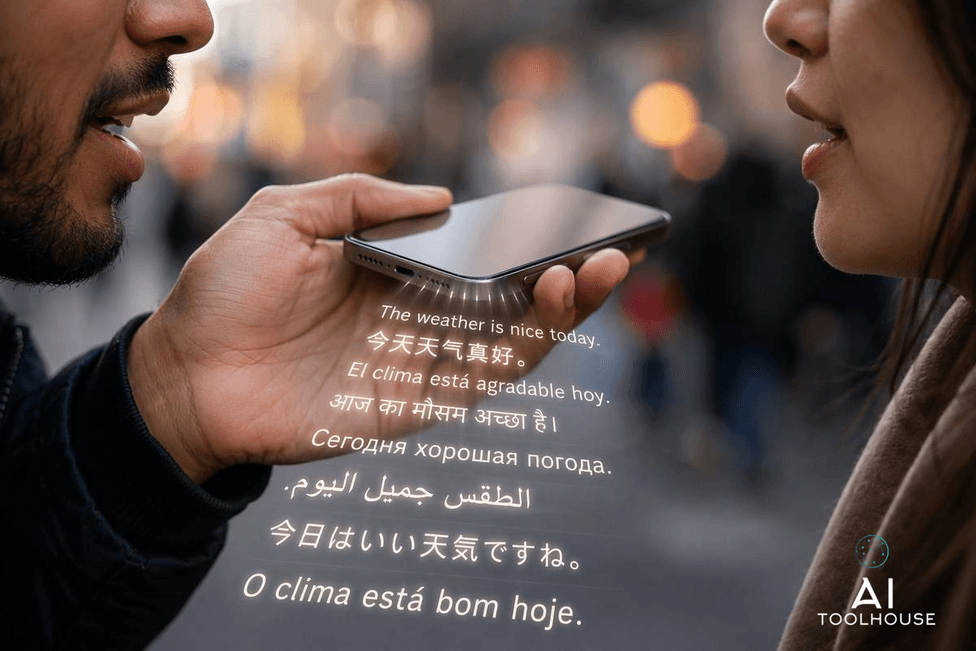
Rumble-2-Flash is a multilingual speech recognition model designed to transcribe speech in more than 40 languages with impressive accuracy and speed. Released under the Apache 2.0 license, it is openly available to the community, inviting broad experimentation and integration.
Key highlights include:
- Parameter Size: 0.5 billion, making it compact relative to many state-of-the-art models.
- Language Coverage: Supports automatic language detection across over 40 languages.
- Framework Compatibility: Runs natively on Hugging Face Transformers and vLLM without requiring custom runtime code.
- Output Control: Offers flexible transcription options, such as rendering numbers as digits or words, verbatim repeats, and filler word handling.
- Speed: Processes an hour of audio in roughly half a second, achieving real-time factors (RTFx) exceeding 7,000 on full batched inputs.
This balance of size, speed, and capability positions Rumble-2-Flash as a practical solution for diverse speech-to-text applications.
Architectural and Training Innovations
Rumble-2-Flash builds upon the Qwen3-ASR architecture, ensuring good day-one performance and interoperability with prevalent Transformer-based inference engines.
A notable innovation in its development is the use of on-policy distillation:
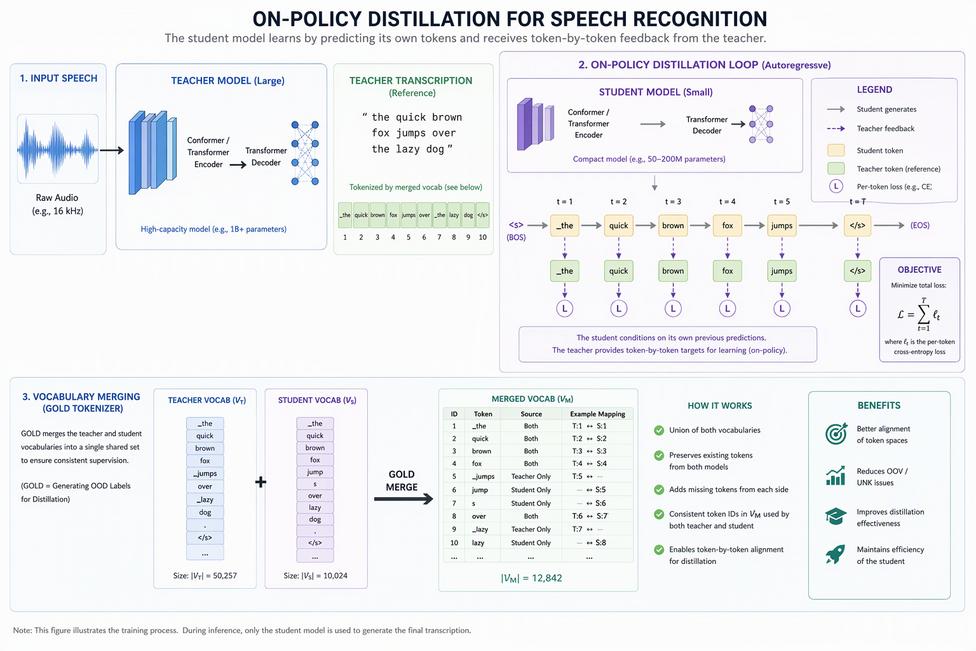
- The larger, production-grade Rumble-2 model acts as a teacher, generating transcriptions which the student model (Rumble-2-Flash) then learns to replicate.
- Rather than learning from fixed transcripts, the student predicts its own outputs and receives detailed token-by-token feedback, improving accuracy where it errs most.
- A sophisticated tokenizer merging technique (GOLD) reconciles vocabulary differences between teacher and student models, enabling effective distillation without token alignment issues.
This method enables the 0.5B-parameter student model to retain high fidelity and generalization despite its modest size.
Performance Benchmarks and Comparison
Accuracy:
On widely respected benchmarks such as the Open ASR Leaderboard multilingual track, Rumble-2-Flash achieves an average error rate of 6.96% across languages including Chinese, German, French, Hindi, and English.
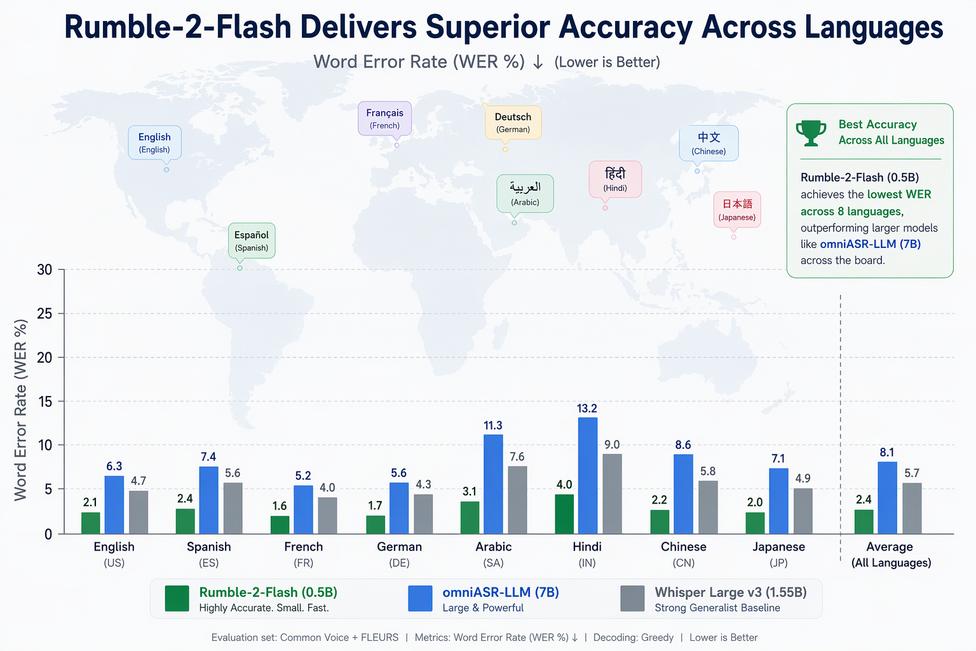
This outperforms larger models like Meta’s omniASR-LLM (7B parameters) by a significant margin, despite being 15 times smaller.
For English transcription specifically, it maintains a competitive Word Error Rate (WER) of around 6.6%.
Real-World Application:
Handling real phone calls accurately is challenging due to compression artifacts, ambient noise, and diverse speaker accents. In a rigorous 302-hour call-center benchmark involving 14 English accents, Rumble-2-Flash achieves a 7.86% WER, nearly matching NVIDIA’s hefty 30B-parameter Nemotron 3.5 Transcribe model’s 7.78% WER.
| Model | Parameters | Language Support | WER on English Calls | Speed (RTFx) |
|---|---|---|---|---|
| Rumble-2-Flash | 0.5B | 40+ | 7.86% | >7,000 |
| NVIDIA Nemotron 3.5 Transcribe | 30B | English | 7.78% | N/A |
| Qwen3-ASR (0.6B) | 0.6B | Multilingual | 8.7% | N/A |
| Qwen3-ASR (1.7B) | 1.7B | Multilingual | 7.4% | N/A |
Speed:
Rumble-2-Flash’s ultra-fast throughput means processing vast amounts of audio rapidly, which is valuable for real-time applications and large-scale transcription tasks.
Practical Implications and Use Cases
Multilingual Applications
Rumble-2-Flash’s extensive language coverage and automatic language identification make it ideal for products targeting global markets with diverse linguistic needs.
Real-Time Transcription
Its massive speed advantage allows speech-to-text services to run with minimal latency, critical for live captioning, call centers, and interactive voice assistants.
Open Source and Integration
Released under Apache 2.0, users can freely adapt, extend, or embed Rumble-2-Flash into existing workflows without restrictive licensing hurdles.
Developer Ecosystem
Native compatibility with Hugging Face Transformers and vLLM lowers barriers for implementation, enabling fast prototyping and deployment.
Getting Started with Rumble-2-Flash
Developers can quickly start transcribing audio using this simple Python example leveraging the Hugging Face ecosystem:
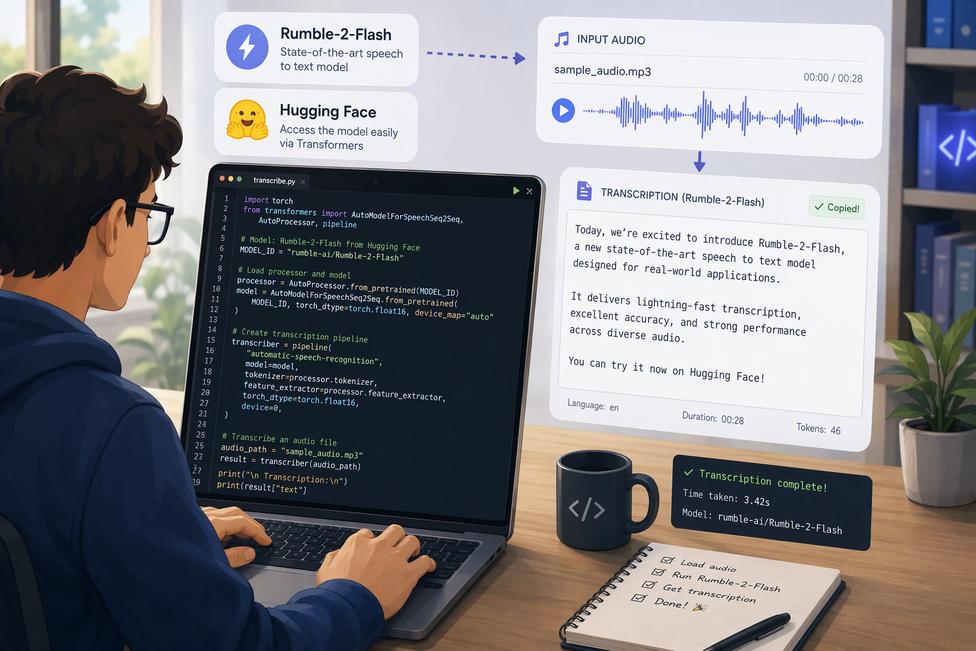
from transformers import AutoProcessor, AutoModelForMultimodalLM

model_id = "Reson8/Rumble-2-Flash"
processor = AutoProcessor.from_pretrained(model_id)
model = AutoModelForMultimodalLM.from_pretrained(model_id, device_map="auto")

inputs = processor.apply_transcription_request(
    audio="https://hf.co/datasets/hf-internal-testing/dummy-audio-samples/resolve/main/bcn_weather.mp3",
    language="English"
).to(model.device, dtype=model.dtype)

output = model.generate(**inputs, max_new_tokens=512)
generated = output[:, inputs["input_ids"].shape[-1]:]

print(processor.decode(generated, return_format="transcription_only")[0])
Audio sources can be local files, URLs, or array-like objects, enabling flexibility.
Conclusion
Rumble-2-Flash exemplifies a new tier of speech recognition models that balance compact size, multilingual versatility, and high accuracy without compromising speed. Its advanced training approach, on par performance with much larger models, and open accessibility make it a foundational tool for developers and organizations aiming to deploy scalable, efficient speech-to-text solutions across diverse languages and noisy real-world environments.
As speech AI continues to shape communication technologies, Rumble-2-Flash’s innovation signals a promising pathway toward democratizing access to robust, fast, and adaptable multilingual speech recognition.