

Inside the Agent-Native Hackathon: Innovative Winners Redefining AI Agents
Discover the groundbreaking innovations from the Agent-Native hackathon winners, highlighting their unique AI agent-native applications that advance autonomy and efficiency in software agents.
On this page
Introduction to Agent-Native Applications and the Hackathon
The evolving realm of AI is seeing a surge in agent-native applications—software systems designed to leverage autonomous agents deeply embedded within their core functionalities. Recently, Builder.io hosted the Agent-Native hackathon, drawing 221 entries over two weeks, with a collective prize pool of $10,000. This event showcased the most creative and impactful solutions centered around agent-native technology, underlining its growing importance in AI-driven automation and software design.
What Are Agent-Native Applications?
Agent-native applications integrate intelligent agents that operate natively within the application environment, facilitating dynamic interaction, automation, and decision-making without constant user input. Unlike traditional apps relying heavily on user commands or simple scripted logic, agent-native apps embed autonomous agents that adapt, learn, and perform complex tasks more naturally and efficiently.
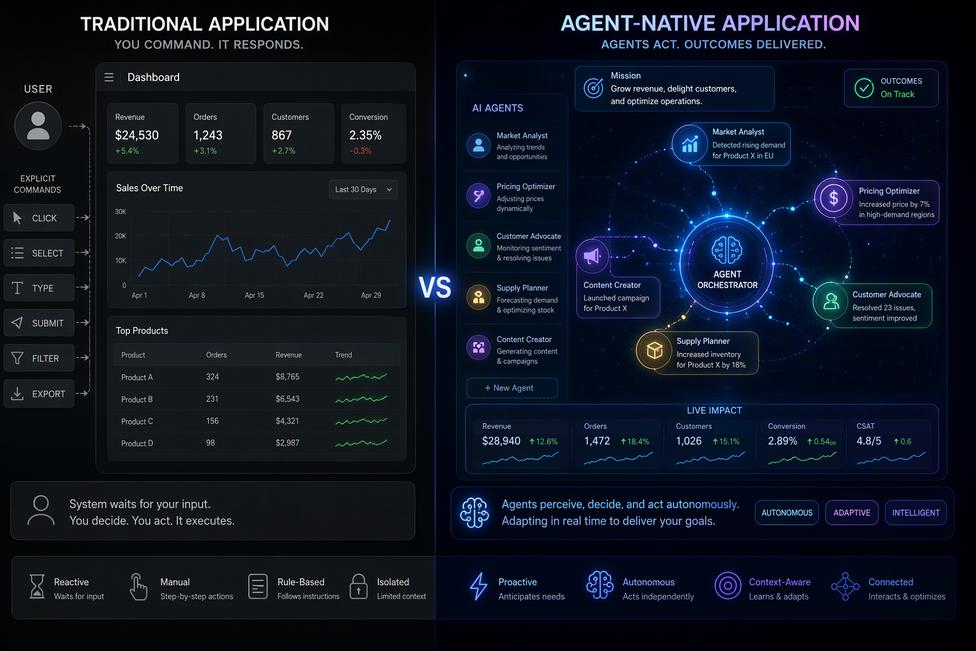
This approach enhances responsiveness, scalability, and contextual awareness in modern AI systems, opening new horizons for developers seeking sophisticated automation and interaction paradigms.
Overview of the Agent-Native Hackathon
The hackathon aimed to spur innovation around agent-native technology, encouraging participants to build creative, functional, and scalable applications utilizing autonomous agents. Participants delivered a wide array of solutions, with varying use cases from customer support automation to workflow optimization.
After rigorous judging, the winners stood out for their originality, technical prowess, and real-world applicability.
Highlighting the Winning Projects
Grand Prize Winner: Muscle Memory
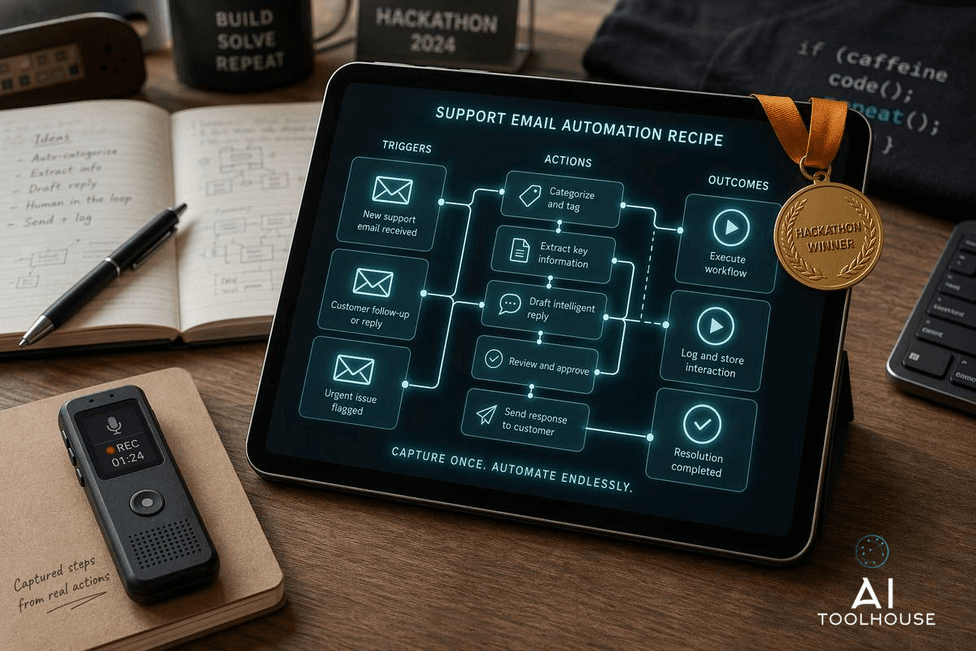
The top prize of $5,000 went to Muscle Memory, an innovative system that converts recorded support-email actions into zero-token "recipes."
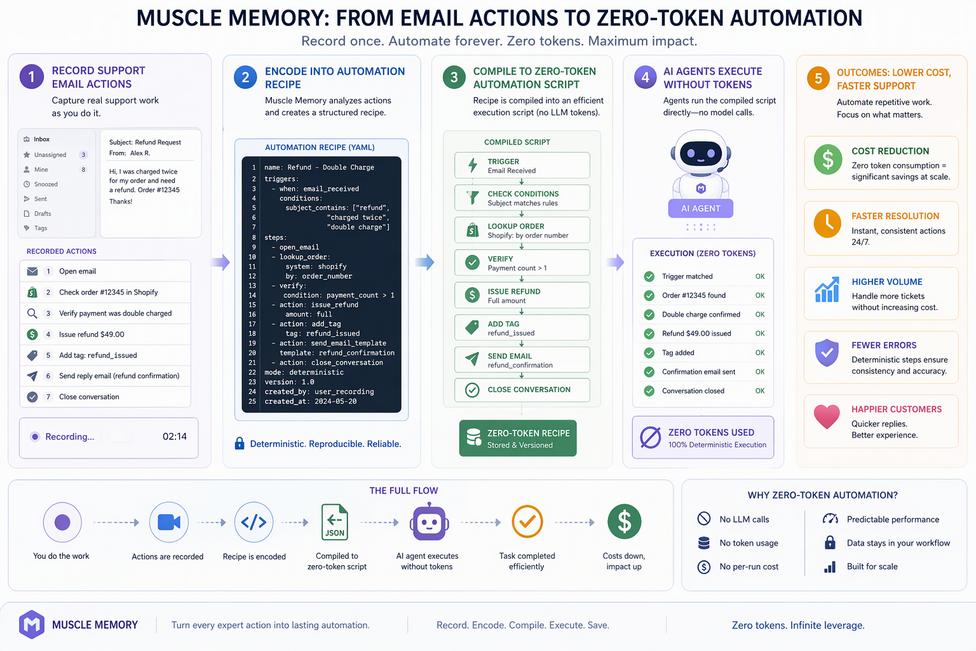
This means that repetitive tasks in customer support email handling are encoded for effortless automation and can be executed without incurring token usage in large language model API calls, effectively optimizing cost and performance.
Muscle Memory embodies critical attributes of agent-native applications by enhancing agent handling capabilities without sacrificing efficiency, representing a significant leap in AI-assisted support workflows.
Other Distinguished Winners
Beyond Muscle Memory, the hackathon awarded four category-specific prizes, highlighting diverse applications and novel functionalities:
ClipView: An agent-native alternative to widely used video messaging platforms, focusing on open-source solutions and privacy-conscious design.
FlowBot: A workflow automation tool that utilizes agent-native principles to streamline multi-step tasks with AI agents acting autonomously yet transparently.
SmartDoc: A documentation assistant powered by agent-native architecture that dynamically generates and updates project documentation based on real-time interactions and changes.
DataPilot: An intelligent data querying agent that leverages native AI reasoning to interpret complex datasets and answer nuanced business questions with minimal human intervention.
Core Innovations and Technical Differentiators
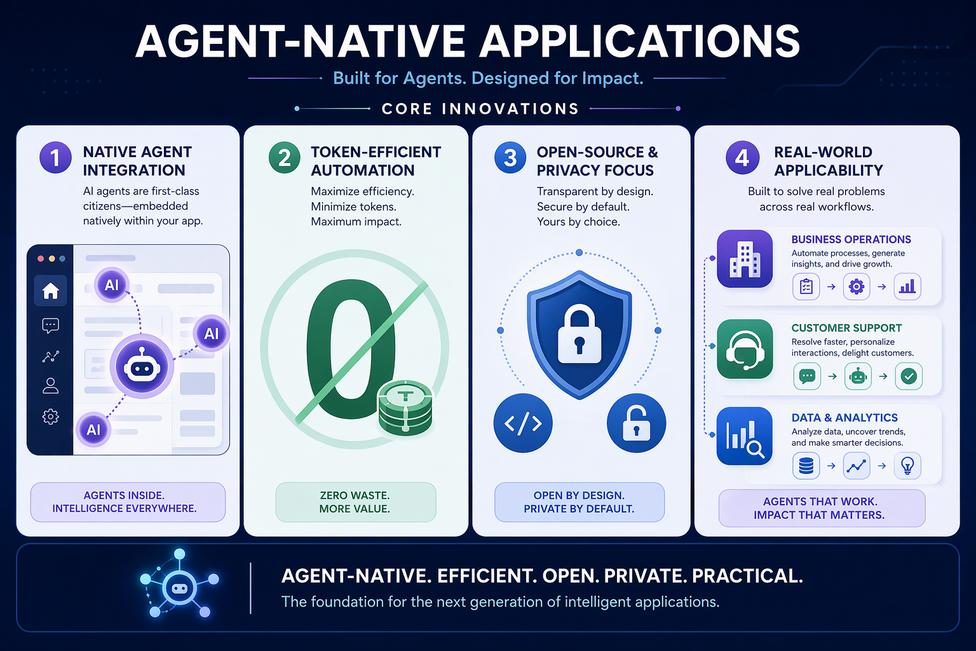
Compared to traditional applications and even some AI-based tools, the winning projects demonstrated:
Native agent integration: Agents are not just add-ons but core to the application’s operational logic.
Token-efficient automation: Techniques like zero-token recipes enhance cost efficiency in API-based AI interactions.
Open-source and privacy focus: Emphasizing transparent, accessible technology respects user control over data.
Real-world applicability: Demonstrated value in practical use cases, from customer support to data analysis.
These characteristics mark a new class of AI applications focused on deep agent autonomy and practical deployment.
Practical Implications for AI Developers and Businesses
The success of these projects indicates a maturing landscape where agent-native applications can significantly improve task automation, reduce operational costs, and enhance user experience. Developers can leverage these insights to rethink how they embed AI agents within their apps, potentially transforming workflows and customer interactions.
For businesses, adopting agent-native solutions promises efficiency gains and novel capabilities that traditional automation struggles to achieve, particularly in dynamic, complex environments.
What Not to Do When Building Agent-Native Applications
While agent-native apps offer exciting benefits, caution is advisable to avoid common pitfalls:
- Overcomplicating the agent’s scope leading to inefficiency.
- Ignoring token and resource costs in agent interactions.
- Neglecting privacy and security in agent data handling.
Learning from both successful and misstep examples helps build robust, scalable agent-native solutions.
Conclusion
The Agent-Native hackathon showcased exemplary innovations that push the boundaries of what autonomous AI agents can achieve when deeply embedded within applications. Muscle Memory’s zero-token automation stands out as a model for cost-effective AI agent workflows, while category winners prove the versatility and power of agent-native design principles.
As AI agents continue gaining prominence, agent-native applications will likely become central to future software landscapes, driving smarter, more autonomous digital experiences across industries. Developers and businesses alike should closely watch these trends to harness the full potential of agent-native AI.
This growing ecosystem not only represents a technical evolution but also signals shifting paradigms towards more intelligent, efficient, and user-centric application development.