


Harnessing AI to Reverse Engineer Websites: A Practical Guide
Explore how AI can revolutionize reverse engineering of websites. Learn about AI agents, key tools, techniques, and the implications of reverse engineering web APIs and front-end features with AI.
On this page
Understanding Reverse Engineering of Websites with AI
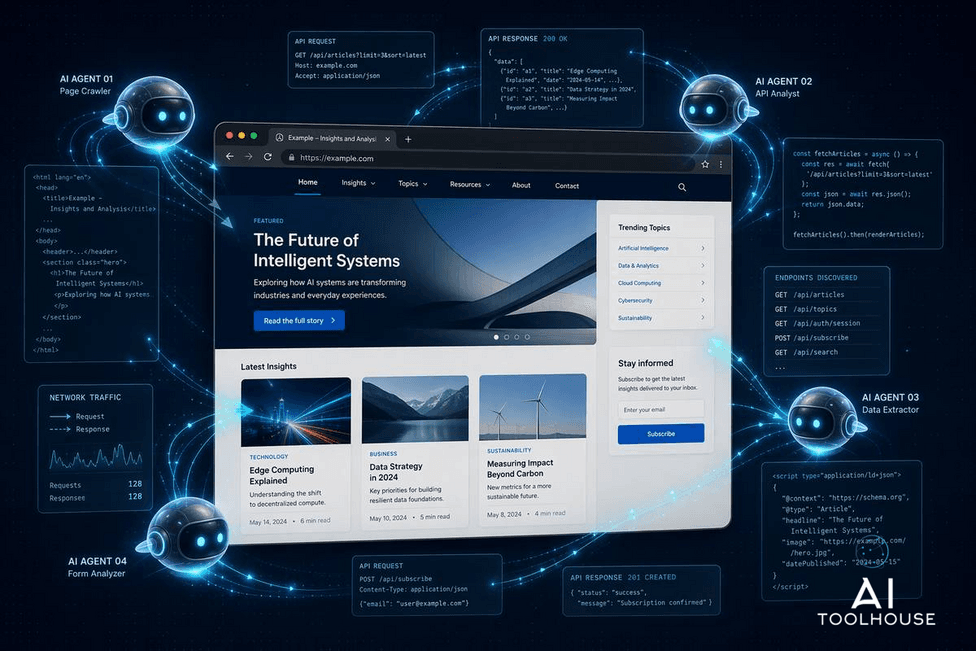
Reverse engineering a website involves analyzing its design, structure, and behavior to understand how it works internally without having direct access to the source code or documentation. With the rapid advancements in AI technologies, especially AI agents capable of intelligent automation and code analysis, reverse engineering websites has become more efficient and insightful.
What Does Reverse Engineering a Website Entail?
At its core, website reverse engineering includes:
- Inspecting front-end code such as HTML, CSS, and JavaScript
- Analyzing network traffic and API communications between client and server
- Decompiling or recreating client-side components
- Deriving functionality and user interaction flows
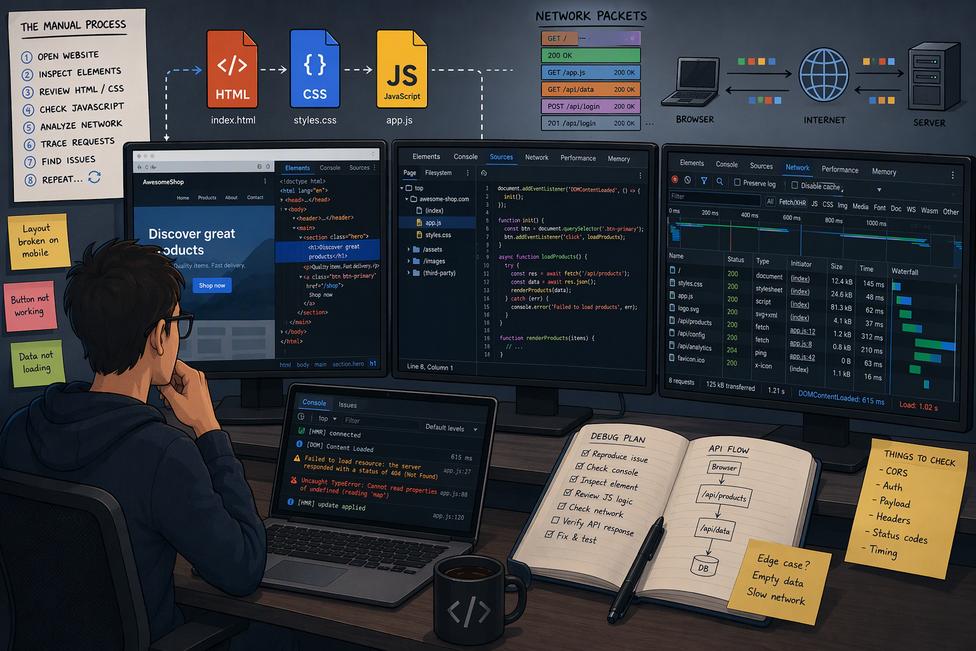
Traditionally, developers manually analyzed these aspects using browser developer tools, decompilers, and network sniffers, which can be time-consuming and prone to error.
How AI Enhances Website Reverse Engineering
AI brings automation, pattern recognition, and inference capabilities to this process. Modern AI systems, particularly AI agents, can observe website behavior, analyze network requests, and generate human-readable insights or even code representations of functionalities.
AI Agents Focused on Reverse Engineering
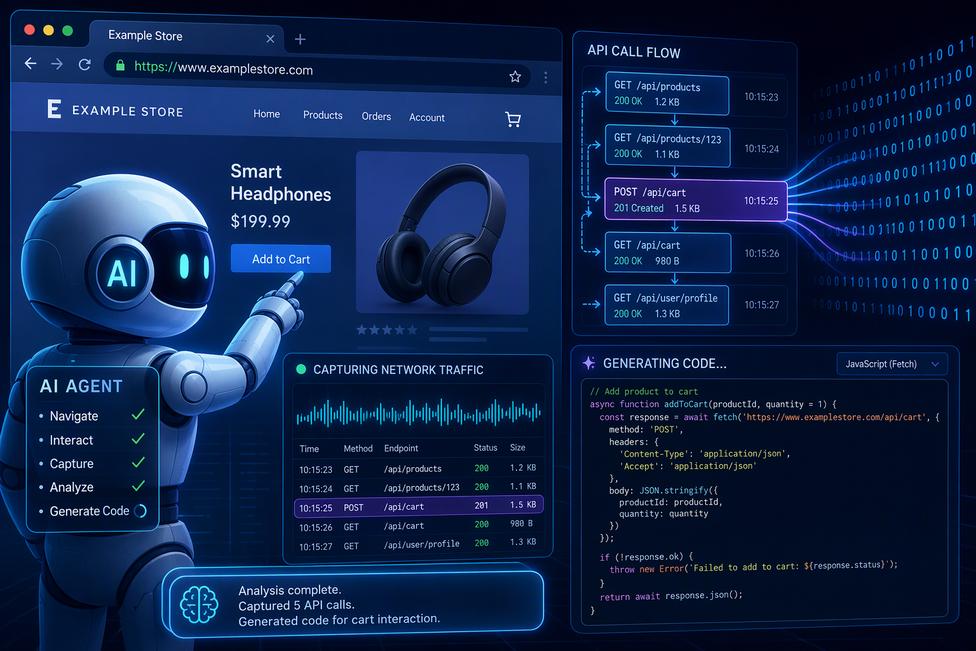
A key innovation is the use of AI agents specialized in reverse engineering tasks. For example, the GitHub project REA (Reverse Engineer Anything) showcases how AI agents can autonomously figure out how a website’s feature functions by exploring its interface and related network activity. These agents are designed to work collaboratively within defined projects, learning and adapting their approach based on prior knowledge and the tools they are connected to.
Capturing and Analyzing Network Traffic
One practical technique AI employs is monitoring network requests made by the website. By inspecting API calls and their payloads, AI can infer endpoints, data structures, and authentication methods. For instance, a project on GitHub utilizing the Claude Code model captures site network traffic to build a reverse-engineered API, making it easier for developers to understand the backend interactions without prior access to API documentation.
Key Tools and Frameworks Supporting AI-Driven Website Reverse Engineering
REA (Reverse Engineer Anything): An AI workspace where agents keep all project files and work collaboratively. It supports skill teaching, tool integration, automation, and remote controlling of tasks. This infrastructure lets users develop a deep understanding of web features by guiding AI agents through complex reverse engineering workflows.
Claude Code Based Projects: These AI models can automate traffic capture and analysis, facilitating quick insight into API interactions and enabling developers to reconstruct backend workflows.
Browser Developer Tools with AI Enhancements: While browser tools remain essential, combining them with AI-powered extensions or scripts can speed up decoding obfuscated JavaScript or dynamically generated content.
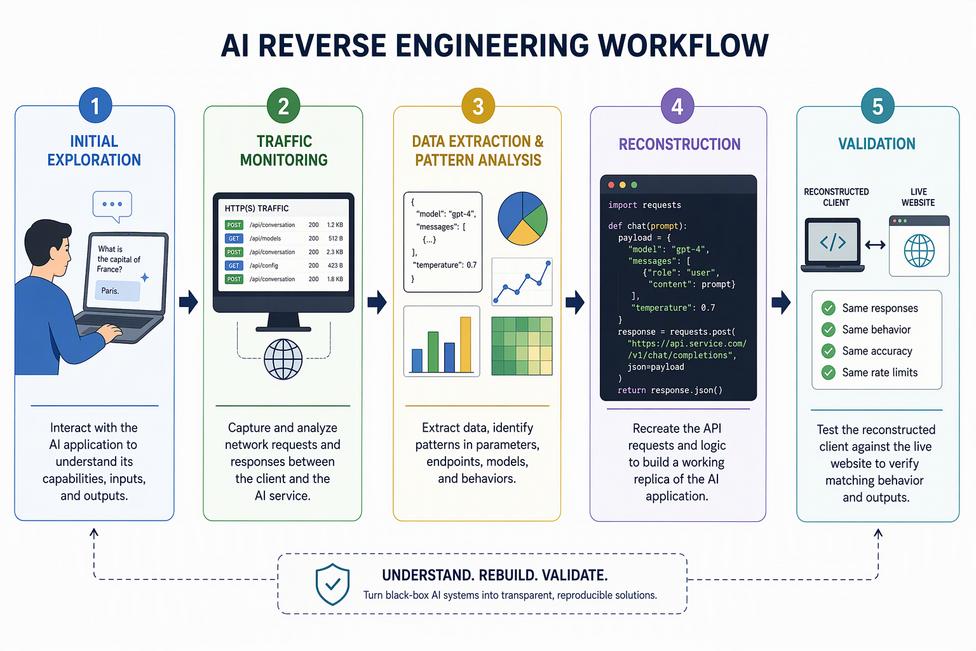
Practical Workflow for Reverse Engineering a Website Using AI
- Initial Exploration: Let AI agents interact with the website, simulating user actions to uncover UI behavior and triggering backend calls.
- Traffic Monitoring: Use AI-driven network interceptors to capture API requests/responses during exploration.
- Data Extraction & Pattern Analysis: AI analyzes captured data to identify endpoints, parameters, and expected results.
- Reconstruction: AI generates human-readable summaries or code snippets replicating the website’s functionality.
- Validation: Test the AI-generated code or insights against live website behavior to ensure accuracy.
Ethical and Legal Considerations
While AI-assisted reverse engineering offers powerful capabilities, it must be approached responsibly. Respect website terms of service and intellectual property rights. Reverse engineering for educational purposes or security research typically has clearer legal standing, but commercial misuse or duplicating proprietary code can lead to infringement issues.
Advantages of AI-Based Website Reverse Engineering
| Aspect | Traditional Methods | AI-Based Methods |
|---|---|---|
| Speed | Manual and time-consuming | Automated, faster analysis |
| Depth of Analysis | Limited by human expertise | Can explore complex patterns and data at scale |
| Accuracy | Subject to human error | More consistent with pattern recognition |
| Usability | Requires technical expertise | Accessible via AI agents with guided workflows |
Challenges and Limitations
- Complex Web Architectures: Modern sites with heavy client-side rendering, obfuscation, and security layers challenge AI accuracy.
- Data Privacy: Captured data streams can include sensitive user information requiring careful handling.
- AI Training Requirements: Effective use demands well-trained AI models and quality datasets.
Future Implications
AI-driven reverse engineering tools could transform how developers and security researchers understand web ecosystems, enabling:
- Faster vulnerability detection and patching
- Enhanced compatibility checks for third-party integrations
- Improved automated web testing and documentation generation
Conclusion
AI is reshaping the landscape of website reverse engineering by automating complex analysis and delivering actionable insights rapidly. By leveraging intelligent AI agents and innovative tools like REA, developers gain powerful means to dissect website functionalities, analyze APIs, and reconstruct components without source code access. This approach enhances productivity and understanding while underscoring the importance of ethical considerations and responsible use. As AI techniques continue to evolve, they will likely become indispensable tools for web developers, security analysts, and researchers navigating the intricacies of modern web applications.