

Exploring the Innovation and Impact of Simon Willison’s Weblog on AI Coding and Beyond
Simon Willison’s Weblog is a vital resource tracking transformative advancements in AI coding, large language models, and agentic engineering. Discover its insights on evolving AI coding agents, LLM inflection points, and emerging trends in 3D modeling and game development.
On this page
Introduction to Simon Willison’s Weblog
Simon Willison’s Weblog is a prominent platform where one of the most insightful voices in AI and software development shares deep analysis and rapid updates on cutting-edge AI technologies. Simon Willison, a key contributor to open-source projects like Django and Datasette, uses his weblog to unpack complex innovations in large language models (LLMs), AI-assisted coding, and generative AI tools, providing both technical depth and practical perspectives.
Central Innovations in AI Coding Explored on the Weblog
Willison’s writing often centers around the evolution of AI coding agents and transformative LLM developments that have occurred within remarkably short timespans. His detailed observations of LLM inflection points highlight how these models have grown from unreliable assistants to robust collaborators in software development.
The Rise of Claude Opus 4.5 and GPT-5.1 Series
In late 2025, the launch of Anthropic’s Claude Opus 4.5 marked a pivotal moment where AI began reliably tackling complex coding tasks without extensive human intervention.
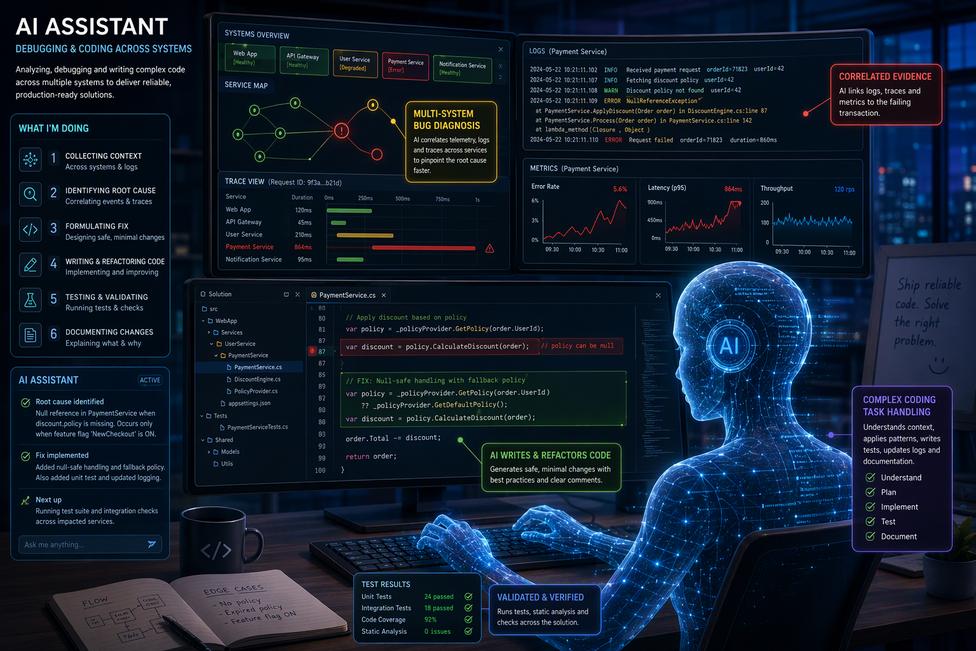
This model’s ability to handle ambiguity and diagnose multi-system bugs demonstrated an accelerated maturity in AI coding agents, making them genuinely useful tools for developers.
Similarly, OpenAI’s GPT-5.1 family (Instant, Thinking, Codex variants) showed comparable reliability improvements, enhancing AI’s role in accelerating coding workflows. Many developers, including Willison himself, moved quickly from experimental tinkering during the holiday season to integrating these tools into daily work by early 2026.
Defining Fable Class Models: Security and Creativity
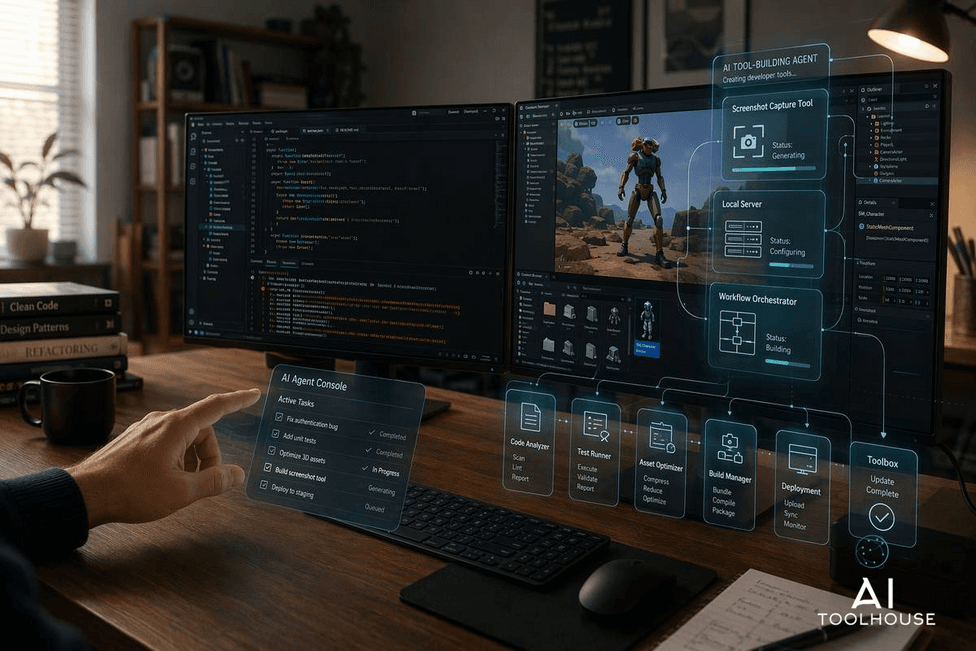
Willison introduced the concept of “Fable class models” with Anthropic’s Claude Fable 5, a model once temporarily restricted due to cybersecurity concerns. These models are characterized by their ability to not only solve complex tasks but also proactively create innovative implementations using extended toolsets. For instance, Claude Fable demonstrated autonomous problem-solving by spinning up custom screenshot mechanisms and local servers to resolve interface bugs.
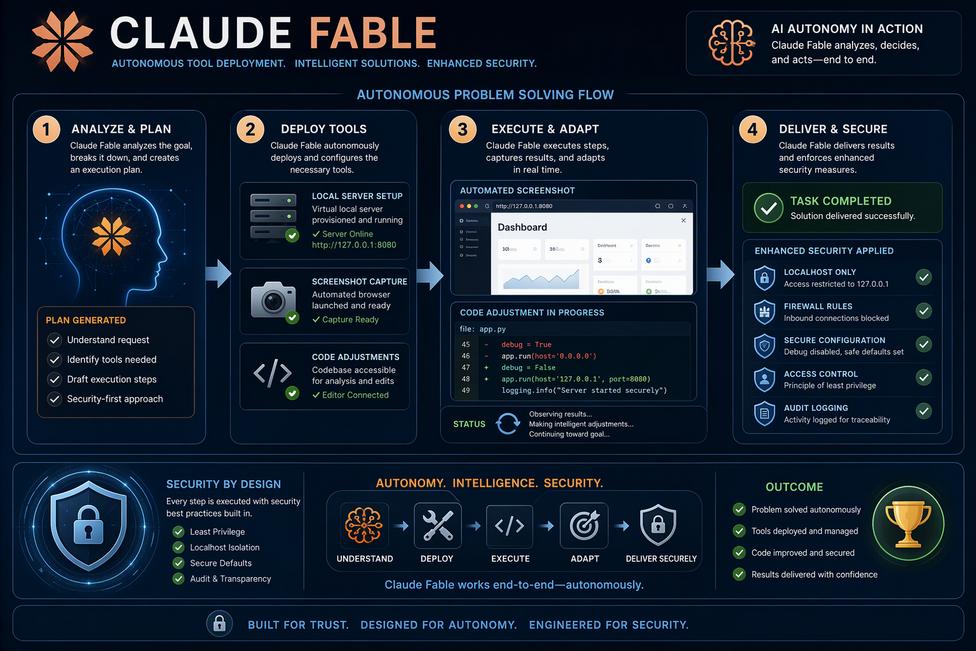
These models exemplify a new baseline for powerful AI agents capable of farsighted, context-aware operations. The blend of aggressive problem-solving and guarding against misuse situates Fable class models at the forefront of practical AI deployment.
3D Modeling and Game Development Breakthroughs
One of the more surprising trends reported on the weblog is the rapid proficiency frontier LLMs have achieved in 3D modeling and game creation. Over a matter of months, models like Claude Fable 5, Opus 5.5, GPT-5.6 Sol, and Gemini 4 series learned to generate complex 3D objects and game dynamics with increasing sophistication.
Willison’s experiments revealed that these LLMs could not just build rudimentary games but transform them with iterative playtesting and adjustments, resulting in enhanced engagement and fun.
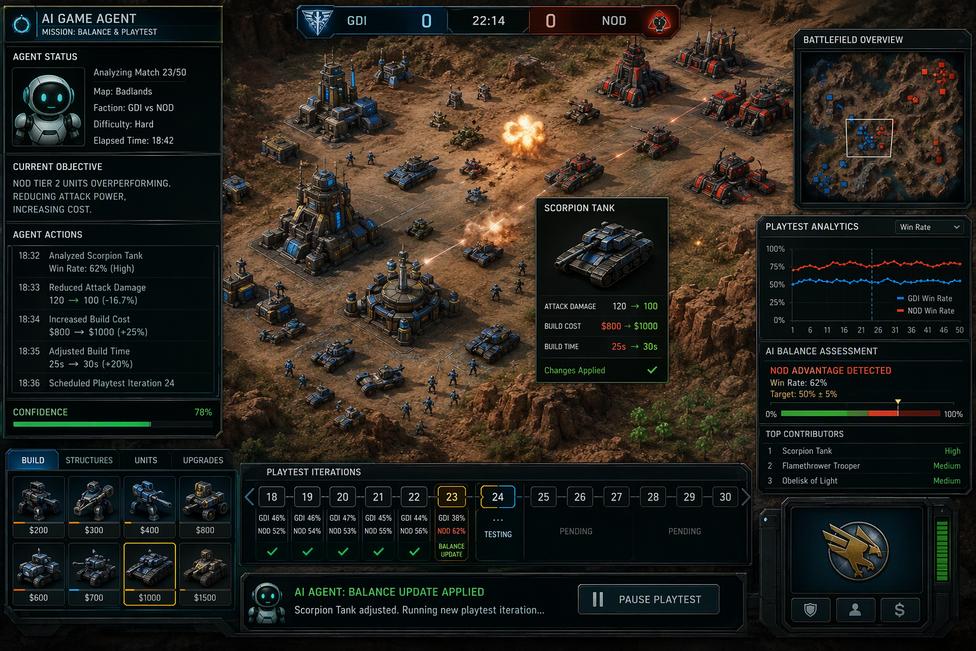
For example, his Command & Conquer-style RTS evolved from dull to compelling after the model autonomously rebalanced gameplay over multiple hours.
This advancement underpins the potential for AI tools to democratize creative development processes while highlighting ongoing debates around AI’s role in the indie gaming scene.
Practical Implications for Developers and AI Enthusiasts
Simon Willison’s insights emphasize a transformation in how software development is conducted. The advent of reliable AI coding agents means fewer errors, faster bug diagnosis, and the enablement of complex tasks previously too intensive for solo developers.
Moreover, the blog points toward an era where expressing clear software goals and descriptions might suffice to have AI build effective solutions. This shift not only accelerates development but also expands accessibility, potentially lowering the barriers for creative and technical innovation.
Structured Comparison: Claude Opus vs. Fable Class Models
| Feature | Claude Opus 4.5 | Claude Fable 5 (Fable Class) |
|---|---|---|
| Reliability | High for common coding tasks | High with proactive problem solving |
| Security Features | Standard safeguards | Enhanced, proactive restrictions |
| Creativity Level | Moderate | High (builds complex auxiliary tools) |
| Typical Use Cases | Daily coding assistance | Complex, multi-step problem resolution |
| Availability | Widely available | Temporarily restricted due to export controls |
SEO Keywords and Reader Questions Addressed
The article naturally incorporates key terms like "Simon Willison’s Weblog," "AI coding agents," "LLM inflection points," "Fable class models," and "3D AI modeling." It answers pressing queries on how the latest AI models impact coding productivity, what makes Fable models unique, and how LLMs are evolving in creative domains.
Conclusion
Simon Willison’s Weblog serves as a crucial lens into the fast-evolving landscape of AI-assisted programming and large language model capabilities. By documenting key LLM inflection points—from the reliable baseline set by Claude Opus 4.5 and GPT-5.1, through the innovative and proactive capabilities of Fable class models, to the burgeoning competence in 3D modeling and game development—Willison provides technology professionals and enthusiasts with invaluable perspectives on the future of software creation.
His observations illustrate that we are entering an era where AI not only supports but significantly enhances creative and technical workflows. For developers, this means embracing AI as a co-creator and problem solver is becoming less a novelty and more a necessity. Simon Willison’s Weblog remains an essential resource for staying informed on these pioneering changes shaping the industry’s next frontier.