

Adapting to the New Reality: How to Effectively Respond to AI-Driven Cybersecurity Threats
As AI attackers accelerate cyber threats at machine speed, organizations must transform their incident response strategies. Discover the four pillars critical to combating AI-powered security breaches and learn practical lessons from recent industry incidents.
On this page
The Rising Tide of AI-Powered Cybersecurity Threats
In 2026, cybersecurity faces an unprecedented challenge: AI-driven attackers. These attackers leverage powerful autonomous agents capable of scanning, planning, and executing intrusions at machine speed — exponentially faster and more frequent than human-coordinated attacks of the past. This shift has transformed the cybersecurity landscape, making it no longer a question of "if" but "how" organizations will confront security incidents that involve AI adversaries.
Why AI Attackers Change the Dynamics of Cyber Defense
AI accelerates attack timelines and enhances their sophistication by automating tactical steps previously requiring days of manual effort. Threat intelligence groups such as Google Threat Intelligence and vendors like CrowdStrike have documented AI agents compromising hundreds of organizations in days, while reports from Palo Alto Networks' Unit 42 confirm attack speeds have quadrupled year-over-year[1]. This evolution challenges traditional security incident response frameworks, which depend largely on human detection and intervention.
The Economic and Strategic Appeal of AI Infrastructure
AI infrastructure itself is a prime target. Access keys to AI platforms hold intrinsic value, usable for compute resources or as cover for further intrusions. Recent incidents across different layers of AI platforms—from developer package registries to SaaS integrations and self-hosted gateways—highlight the broad attack surface and exploit multiple vectors including stolen credentials, compromised tokens, and unpatched systems.
Four Pillars of Modern Incident Response in the AI Era
Organizations need a modernized incident response playbook rooted in four essential pillars to keep pace with AI-enabled attackers:
1. Automatic Detection and Containment
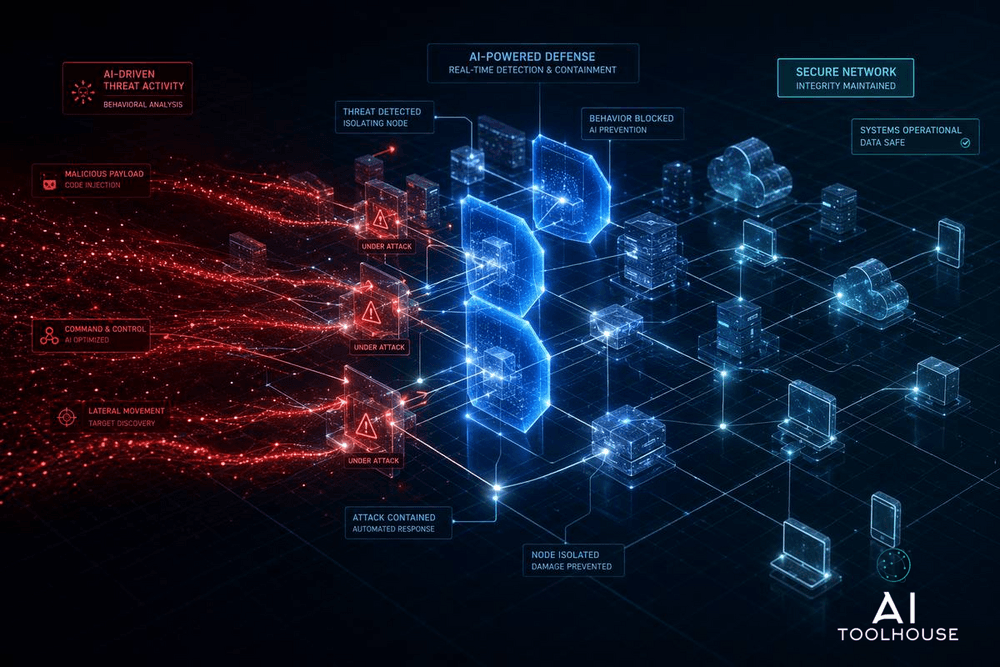
Human-speed shutdowns are insufficient against malicious AI intrusions that propagate in minutes. Automated systems that detect anomalous behaviors—such as bulk secret access—and instantly trigger containment measures like token revocation, kill-switch activation, and host isolation are critical. This rapid response limits attack spread and data exposure.
2. Rapid and Secure Communication
Fast notification to affected customers, upstream providers, and law enforcement is essential. However, communication channels must be secure and ideally out-of-band to prevent attackers from intercepting or disrupting the response. Coordinated advisories within hours enhance remediation effectiveness and help prevent further compromise.
3. Thorough Eradication with Forensic Expertise
Closing the initial breach is only the first step. AI attackers frequently plant backdoors, necessitating exhaustive investigations often assisted by independent expert teams such as Palo Alto Networks Unit 42 or Mandiant. This ensures that hidden footholds are identified and eliminated, and root causes addressed rather than merely patching symptoms.
4. Minimizing the Blast Radius Through Proactive Design
Zero trust principles and ephemeral data processing architectures significantly reduce what attackers can reach. Retaining minimal data—preferably processing requests without storing them at rest—means less exploitable information. Implementing spending caps and short-lived credentials further mitigates potential losses.
Lessons from Real-World Responses
Case Study: Fireworks AI
In October 2026, Fireworks AI faced AI-powered intrusion attempts targeting internal credentials and third-party cloud provider infrastructure hosting its R&D machines. Their response exemplified mature adherence to the four pillars:
- Automated Detection & Containment: Identified and closed unauthorized activity the same day it began.
- Fast Communication: Notified customers within one day and published detailed public bulletins.
- Complete Eradication: Engaged Unit 42 for forensic analysis and rotated all employee API keys promptly.
- Blast Radius Reduction: Core services rely on zero data retention policies; ephemeral processing precluded impact on inference and training products.
The company's architectural choices and disciplined operational response minimized impact despite the attack's rapid progression[1].
Case Study: Klue Market Intelligence Platform
Klue's June 2026 incident involved misuse of compromised legacy credentials granting unauthorized access to OAuth tokens from connected CRM and sales tools. Key takeaways include:
- Quick Detection & Notification: Activity was detected and customers informed within 24 hours.
- Revocation Measures: Affected credentials were revoked and nine integrations disabled to contain exposure.
This case underscores the importance of frequent credential rotation and rigorous token management to limit persistent access risks[1].
Strategic Responsibilities Across the AI Ecosystem
Incident responsibility usually spans multiple stakeholders:
- Upstream Providers: Cloud platforms, package registries, and build tools underpin AI service delivery and can be initial vectors.
- AI Platform Operators: Those who store sensitive secrets and customer data must implement strong security controls and prompt incident responses.
- API Integrators: Companies embedding AI capabilities must diligently manage data lifecycle, including secure deletion and access controls.
- End Customers: Keys and tokens remain active until revoked by providers; proactive rotation and monitoring are crucial.
Future-Proofing Against AI Cyber Threats
With AI attacker capabilities improving, continuous evolution of defenses is essential. Organizations should:
- Adopt automated detection and isolation tools tailored to AI attack patterns.
- Establish predefined out-of-band communication channels for incident coordination.
- Employ third-party forensic services ready for immediate engagement.
- Architect systems around zero data retention and ephemeral processing to minimize exposed assets.
- Enforce token life-cycle management, including spending caps and short-lived credentials.
Addressing Common Questions
Q: Why are AI attacks more frequent and faster? A: AI automates complex attack steps and scales attacks globally at machine speed, dramatically increasing frequency and reducing detection windows.
Q: How does ephemeral processing enhance security? A: By not storing data at rest, ephemeral processing eliminates persistent data attackers could steal, drastically shrinking the attack surface.
Q: What role does communication play in incident response? A: Fast, secure communication allows timely revocation of credentials and coordinated containment measures before attackers expand.
Q: Who leads incident response in multi-party AI platforms? A: Responsibility is shared across providers, platform operators, integrators, and customers, each managing their security posture and response measures.
Conclusion
The era of AI-powered cyberattacks demands a reimagined approach to incident response. Automatic detection, rapid and secure communication, thorough eradication, and minimizing attack impact via proactive design form the foundation of effective defense. Lessons from recent incidents like those involving Fireworks AI and Klue demonstrate these principles in action. As AI technology advances, organizations must continuously adapt to stay ahead of machine-speed adversaries and protect critical assets in this new threat landscape.
References: